



Corpowell: Biomimetic vegan collagen packs effectiveness with ecological benefit
Key takeaways
- VeCollal delivers free-form amino acids in ratios identical to human collagen, allowing instant absorption without digestion, unlike animal collagen peptides.
- Independent trials show VeCollal reduces cellulite by 20% in 56 days and wrinkle depth by 32.9% over eight weeks at lower doses than traditional collagen.
- Produced via fermentation, VeCollal avoids animal use and achieves an 83% lower carbon footprint compared to animal collagen.

Corpowell is making waves with a new expansion deal with Seventure Partners for its plant-based collagens. The nutraceutical expert also reveals that a new independent study has found its vegan collagen can reduce cellulite.
Nutrition Insight speaks with Corpowell to learn about its VeCollal’s effectiveness when compared to animal collagen. The discussion spans scientific rigor, biomimetic collagen, and ethics.
CEO and founder Tony van Campen tells us that the body does not use VeCollal in the exact same way as animal collagen.
“Animal collagen supplements consist of peptides, which are chains of amino acids of various lengths,” he notes. “The body can not use these peptides to build collagen, it needs to digest the peptides into amino acids, which the body can use.”

“Some peptides are not digested, and the body spots these in the bloodstream and recognizes them as a sign of collagen damage, upregulating its own collagen production,” he clarifies. “So animal collagen has a dual benefit: it provides building blocks and also stimulation.”
Van Campen explains that VeCollal gives the same benefits but through different means. Its building blocks are free from amino acids that do not need to be further digested — the body instantly absorbs them.
 Tony van Campen, CEO of Corpowell, highlights VeCollal’s biomimetic vegan collagen, clinically shown to reduce cellulite and wrinkles.“VeCollal also supplies these amino acids in a biomimetic ratio, meaning in the exact same ratio as the amino acids, as found in our own collagen. You can consider this a perfect supply of building blocks, providing all essential amino acids, which animal collagen does not, as it lacks l-tryptophan,” says Van Campen.
“VeCollal also uses a signaling function, but in a different way. Certain ingredients have been added to the biomimetic amino acids to stimulate very specific pathways in the body. These ingredients were uncovered using a specific AI model. We call these ingredients inductors.”
For example, he notes Centella asiatica was added to VeCollal Type 1, as it enables the skin fibroblast cells to release more collagen. “So, VeCollal is inspired by the mechanisms behind animal collagen, but it works in a different way, with perfect building blocks and next-level stimulation to achieve best-of-class results.”
Targeting cellulite
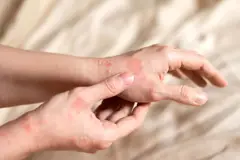
Corpowelll has revealed a recent “breakthrough” clinical trial where VeCollal reduced the volume of superficial alteration (cellulite) by 20.10% in 56 days. This independent, double-blind study involved 60 women and opens the door for co-branding with cosmetic and ingestible beauty brands.
On the study parameters, Van Campen details: “VeCollal heavily invests using validated clinical trial norms, measurement methods, research partners, and publications. We chose ETICHUB, a spinoff of the University of Pavia, Italy, for its strong reputation in independent clinical research, specifically in cosmetics and nutricosmetics. The researchers work completely independently, without any interference tolerated from the sponsor, which is very important.”
“We also use real measuring, objective data in our trials, such as using Antera 3D imaging to precisely measure the depth of orange peel skin on the thighs. Many brands use less rigorous methods, such as questionnaires of sponsored subjects, to claim ‘clinically validated.’”
 Independent clinical study shows VeCollal lowers cellulite volume by 20% in 56 days, using objective 3D imaging methods.He adds that the company supports the debate on vegan collagen, with many having misleading messages, which is why Corpowell wants to stand out using scientific rigor, real evidence, and independent parties.
Minimal dose and ethical source
Corpowell notes that animal collagen doses often require 10–20 g/day, however, VeCollal Type I brings results with 5 g/day over eight weeks and a 32.9% reduction in wrinkle depth.
Van Campen explains: “The fact that the amino acids are free form means they are instantly available for the body — no digestion is necessary and the body receives all the building blocks a human needs.”
“Clinical trials with Aelius Biotech showed very clearly that the absorption of VeCollal in the digestive track far outperforms traditional collagen peptides. Coupling this with strong stimulation by the inductors explains the very strong and fast results.”
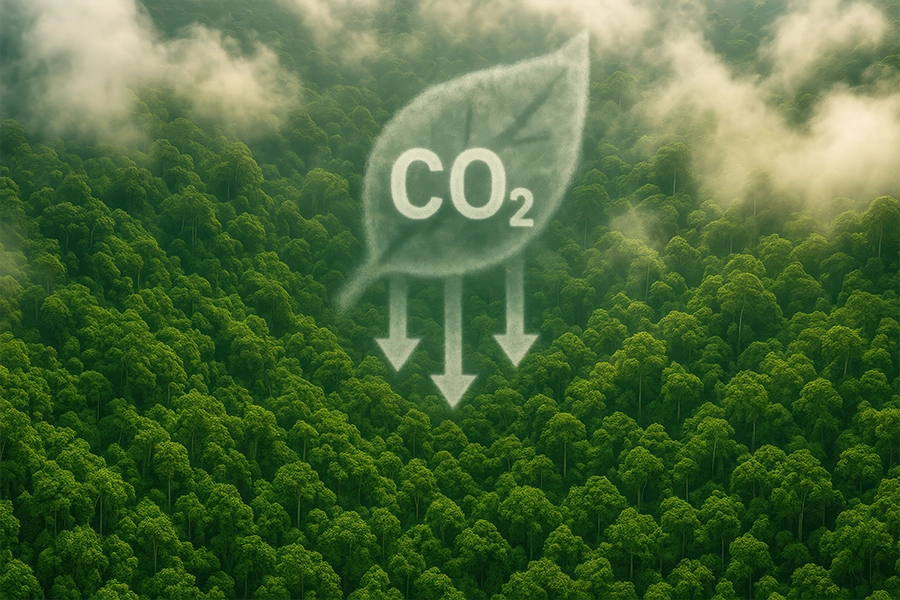 VeCollal production via fermentation offers an ethical, plant-based alternative to animal collagen with an 83% lower CO2 footprint.Moreover, VeCollal is touted to be ethical and ecological, as it does not involve killing animals. Its Life Cycle Assessment shows an 83% lower CO2 emission when compared to animal collagen, as it is made by fermentation. The ingredient also carries various certifications, such as clean label, traceability, and allergen-free.
Van Campen notes that consumers can expect fast and visible results when taking VeCollal in a short period.
“We don’t really see limitations in the current science, nevertheless we continuously look for new innovations based on this technology and improvements on both a scientific and product level.”
“Besides clinical validation, we invest heavily in R&D and new groundbreaking concepts, such as our Type 2, which we recently launched in the joint health segment,” he concludes.
We previously spoke with Stratum Nutrition, Bioiberica, BioCell Technology, and Dolcas Biotech to explore the latest formulation advances and market trends around animal collagen.