




Diabetes and cavities: Sugars move from blood to saliva causing oral microbiome dysbiosis
Key takeaways
- High blood glucose allows sugars to migrate into saliva, reshaping the oral microbiome, details a new study.
- Elevated salivary glucose and fructose promote cavity-causing bacteria like S. mutans.
- Effective glycemic control can reduce sugar transfer to saliva and lower tooth decay risk.

New research has found that people with type 2 diabetes have higher tooth decay than others. The scientists explain that high blood glucose levels, or hyperglycemia, cause the migration of sugars, like glucose and fructose, to saliva.
The publication in Microbiome explains that this process causes changes to the oral microbiome, enabling cavity-causing bacteria to grow. Specifically, the researchers from the University of Osaka, Japan, identify Streptococcus mutans as a driver while beneficial species are reduced in population.
“The increase of these metabolites in saliva fueled changes in the oral microbiome, enriching cariogenic bacteria such as S. mutans and reducing the abundance of health-associated species like S. sanguinis, shifting oral biofilm metabolism toward glycolysis and carbohydrate degradation,” says study lead author Akito Sakanaka, department of Preventive Dentistry, Graduate School of Dentistry.

“This shift in the microbial population increases acid production, which erodes tooth enamel and strongly links diabetes to dental caries.”
However, when blood sugar was controlled, the transformation of sugars to saliva decreased, enabling a healthier microbiome balance and reduced tooth decay risk. The researchers stress that glycemic control is essential for improving oral health in diabetic patients.
Metabolomic profiling of saliva
The research team checked gland-derived saliva for metabolite profiles to learn of the participants’ metabolic status without the bacteria being present. This was compared also against the whole saliva and plasma samples from people without type 2 diabetes.
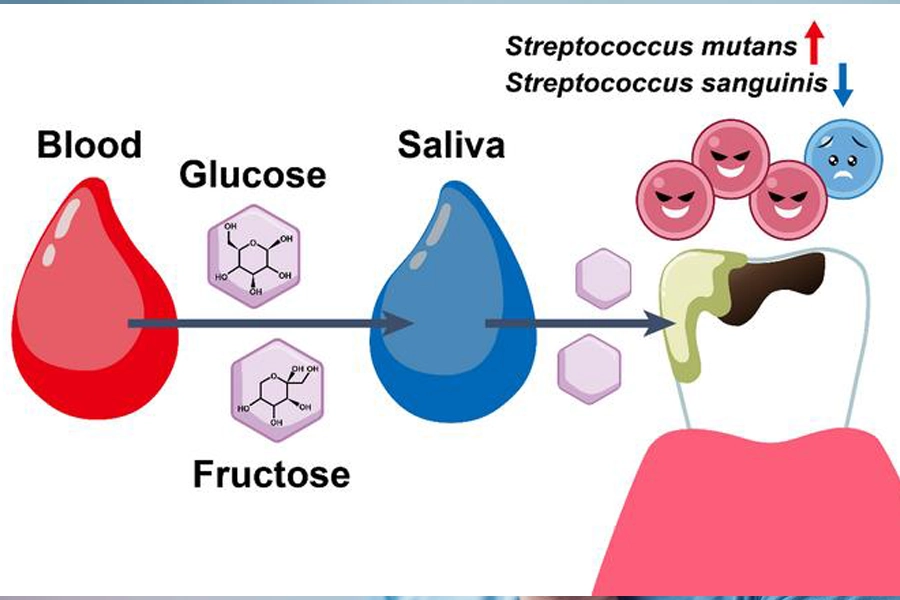 Elevated blood glucose levels can alter the oral microbiome, increasing the risk of tooth decay in people with diabetes (Image credit: Sakanaka).“We developed a novel method for untargeted metabolomic profiling of gland-derived saliva that preserves intact metabolite profiles before modification by the oral microbiome,” explains study senior author Masae Kuboniwa, department of Biotechnology, Graduate School of Engineering.
“This allowed us to understand the changes in these metabolites between the blood and saliva, and their subsequent changes after exposure to the oral microbiome.”
The team was then able to observe how the fructose and glucose migration from blood to saliva affected the oral microbiome using microbial sequencing.
Nutrition solutions to blood glucose management
A booming interest in blood glucose management is driving nutritional product development, such as Rousselot’s Nextida GC. This science-based collagen peptide is touted to balance blood glucose levels and boost GLP-1 levels. Nutrition Insight recently caught up with the company’s science team at its recent Innovation Days in Gent, Belgium.
We also explored solutions from Valio, which developed lactose-free dairy-based products, and PharmaLinea, which developed the Your Prediabetiq Line of supplements for balanced blood glucose levels with an immediate effect.
This year, scientists suggested that glycemic control measures may influence food choice and eating behaviors, not body weight, as is often studied. Other researchers discovered a protein-producing bacterial strain, Ruminococcus torques, that could play a role in regulating blood glucose and fat metabolism.