




Functional mushrooms for F&B: M2 Ingredients CEO on advancing application science
Key takeaways
- M2 Ingredients’ new R&D lab helps brands overcome common formulation hurdles such as earthy flavors, sediment, and stability issues in mushroom-infused products.
- The facility offers pilot-scale testing to validate commercial viability and optimize texture or solubility before brands commit to expensive full-scale production.
- By using vertical integration and whole-mushroom science, the center aims to replace “trial and error” with evidence-based methods for functional beverages and foods.
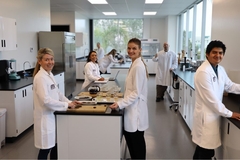 (All image credits: M2 Ingredients).
US-based functional mushroom grower M2 Ingredients has inaugurated its new Center of Innovation in Vista, California. The R&D application lab addresses critical gaps in product development for F&B brands looking to elevate their products with nutritional fungi, offering sensory and flavor pairing expertise, solubility and suspension optimization, and deep mushroom-specific ingredient science.
Consumer demand for adaptogens and nootropics is fruiting, but formulating with fungi often presents hurdles like earthy off-notes, sediment issues, and complex stability challenges that can derail brand concepts.
The new site provides pilot-scale capabilities that help companies solve formulation “pain points” — such as solubility in ready-to-drink (RTD) solutions or texture in functional gummies — without the risk of jumping straight to full-scale production.

Nutrition Insight meets with Jeff Rogers, CEO of M2 Ingredients, to discuss the technical barriers currently restraining the functional fungi industry. He details how vertical integration is making science-backed mushrooms more commercially viable in functional beverages, powders, gummies, bars, and nutritional foods.
What has most limited the adoption of functional mushrooms in mainstream F&B applications?
Rogers: The adoption of functional mushrooms in mainstream food and beverage has historically been limited not by consumer interest, but by execution.
Demand for functional ingredients that support nootropic, adaptogenic, cognitive, and digestive health has accelerated rapidly, yet many mushroom ingredients available to brands were designed primarily for supplements, not for real-world food and beverage systems.
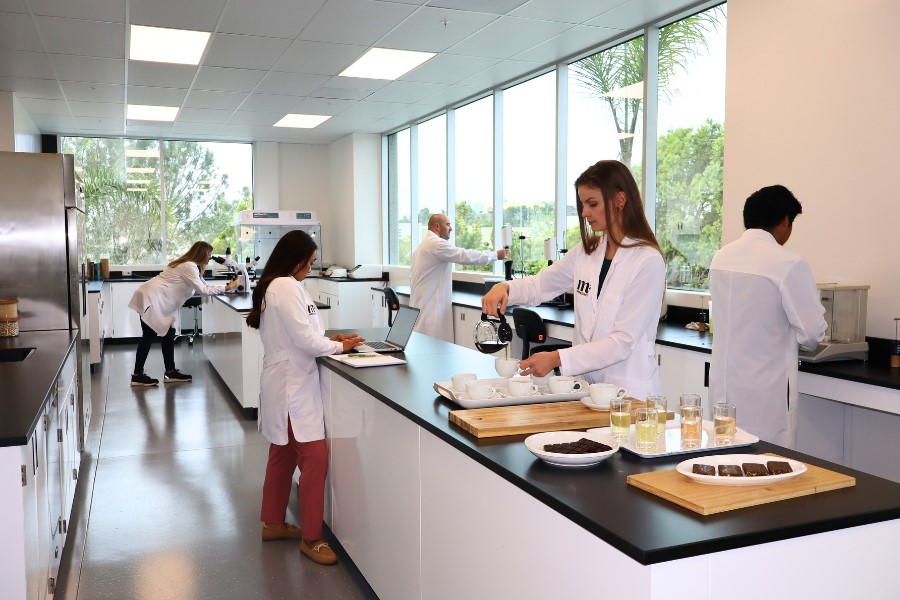 The M2 Ingredients Center of Innovation in Vista, California.At M2, we are changing the narrative and investing in more science and broader applications in F&B. Through our solid-state formation platform, we are producing at the highest levels of product quality, consistency, and performance. We are expanding our science and application knowledge to help consumers see what is truly possible with these fantastic performance ingredients.
What formulation challenges do brands most often underestimate when working with mushroom ingredients?
Rogers: Brands tend to underestimate how technically complex and value-add functional mushrooms can be, especially in beverages and RTDs.
Working closely with an experienced partner like M2, the challenges around managing dose, flavor, and mouthfeel can be quickly overcome through formulation design and processing techniques.
Learning how to manage heat, shear, pH, and homogenization across various types of functional mushrooms yields a superior, higher-quality product that meets desired performance parameters.
How do pilot-scale application capabilities change brands’ mushroom-based product development compared to bench-scale R&D alone?
Rogers: Having pilot-scale application capabilities fundamentally changes how brands can approach development. Bench-scale work determines whether an idea is possible, but pilot-scale work determines whether it is commercially viable.
With pilot-scale systems, brands can validate processing conditions, stress-test stability, and optimize sensory performance under real manufacturing parameters before committing to full-scale production. This removes guesswork, shortens iteration cycles, and prevents costly reformulation later in the process.
What has been the biggest challenge to translating mushroom research into scalable, evidence-driven nutrition products?
Rogers: One of the biggest barriers has been the gap between science and execution. Research is only valuable when it aligns with ingredient consistency, format selection, and real-world processing conditions.
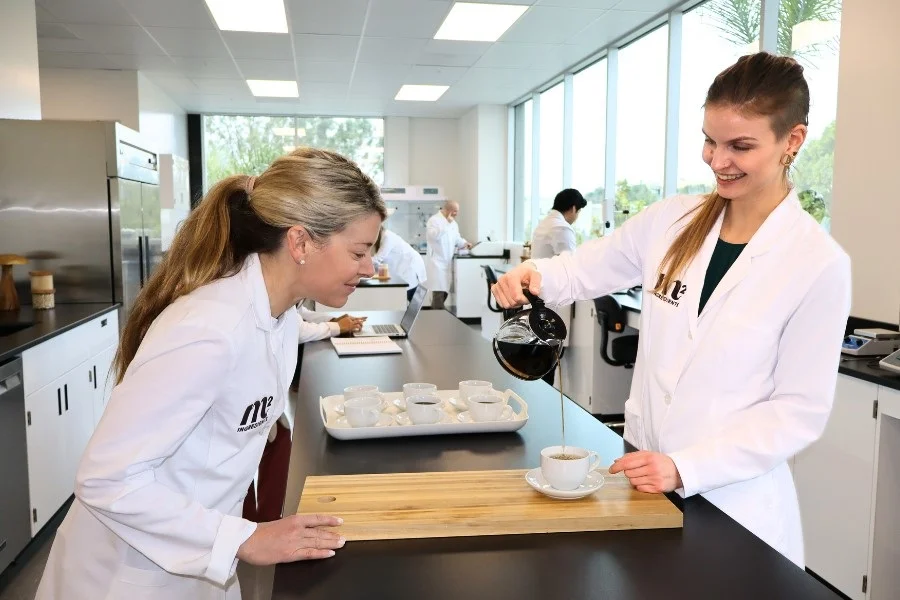 Researchers test out new blends of functional mushroom coffee.Variability in mushroom sources, along with ongoing confusion often amplified by companies that lack supporting science around fruiting bodies versus mycelium, has made it harder for brands to confidently connect published research to finished products.
The reality is that different bioactive compounds exist throughout the organism, and successful products result from understanding which compounds matter, how they are delivered, and how they are preserved throughout manufacturing.
How do you see shared R&D infrastructure, like the M2 Center, influencing innovation timelines and risk for nutritional F&B brands over the next few years?
Rogers: At M2, we invest heavily in end-product research to ensure the ingredients going into real applications perform well in clinical trials. We use full-spectrum, whole mushrooms to make sure the complete range of bioactive compounds is available to the consumer.
We have conducted more clinical research on our top-performing mushroom ingredients than any other supplier in the market, allowing us to stand firmly behind our products. That scientific foundation now enables us to support our customers more effectively by helping ensure efficacious doses translate into finished products and ultimately deliver meaningful benefits to end consumers.
Looking forward, shared R&D infrastructure like the M2 Center of Innovation is poised to significantly reduce both innovation timelines and risk for food and beverage brands. Functional ingredient trends are moving faster than most internal teams can keep up with, and companies are under pressure to be first to market with credible, differentiated products.
By providing access to a fully integrated team of food scientists, chemists, mycologists, and product format experts, along with pilot and commercial scale capabilities, M2 enables brands to move from concept to finished product more efficiently. Instead of learning through costly trial and error, partners can leverage proven expertise, validated systems, and scalable infrastructure to bring high-quality functional mushroom products to market faster and with greater confidence.