



Activ’Inside opens joint lab to tackle botanical bioavailability gap
Key takeaways
- Activ’Inside and the University of Bordeaux launched Biophysia to close evidence gaps in botanical bioavailability using human-relevant analytical and metabolic data.
- The lab applies pharma-grade tools — including UHPLC-MS, NMR, and ADME-style frameworks — to botanicals, an area historically under-researched in nutrition science.
- Bioavailability is emerging as a new benchmark for ingredient quality, shifting the sector from promise-driven claims to performance-backed formulations.
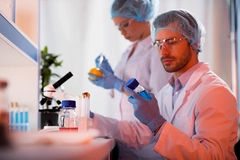
Activ’Inside has inaugurated a joint laboratory in France to drive scientific research on the bioavailability of phytonutrients and their health benefits. The facility was launched with Molécules d’Intérêt Biologique (MIB) at the University of Bordeaux and is also supported by the country’s National Research Agency (ANR).
Nutrition Insight speaks with David Gaudout, the health and nutrition company’s co-founder and chief innovation officer, to learn how Biophysia bridges a botanical industry gap by leveraging academic researchers’ expertise in polyphenol research.
Botanical ingredients face ongoing criticism over bioavailability, authorized health claims, and weak evidence. Gaudout details that this includes a lack of robust, mechanistic, and quantitative evidence regarding the links between ingredient intake, systemic exposure, and objective health outcomes.

To solve these issues, he explains how Biophysa investigates the bioavailability of phytonutrients, which is the fraction absorbed, metabolized, and ultimately available for biological action.
“The lab uses state-of-the-art analytical technologies, such as UHPLC-MS (ultra-high performance liquid chromatography-mass spectrometry), NMR (nuclear magnetic resonance), and integrated experimental models spanning digestion and absorption, including metabolite profiling in human blood and urine. This approach goes beyond simple compositional analysis to address physiologically relevant absorption and metabolic fate.”
The laboratory conducts research in three main areas: bioactive compound analysis, bioavailability studies, and health benefit evaluation.
Botanicals versus pharma
Bioavailability is essential to human nutrition, but scientific testing of this is less consistently applied to botanical ingredients compared to pharmacology.
“Botanical extracts contain hundreds of compounds, i.e., polyphenols, with diverse physicochemical properties, making it difficult to define which molecules matter and how they are absorbed,” says Gaudout.
“Additionally, classical nutritional studies often measure intake or total antioxidant capacity, not systemic absorption and metabolite profiles. Standard ADME (absorption, distribution, metabolism, and elimination) frameworks from drug research are less commonly used in nutrition science, even though they are key to bioavailability determination.”
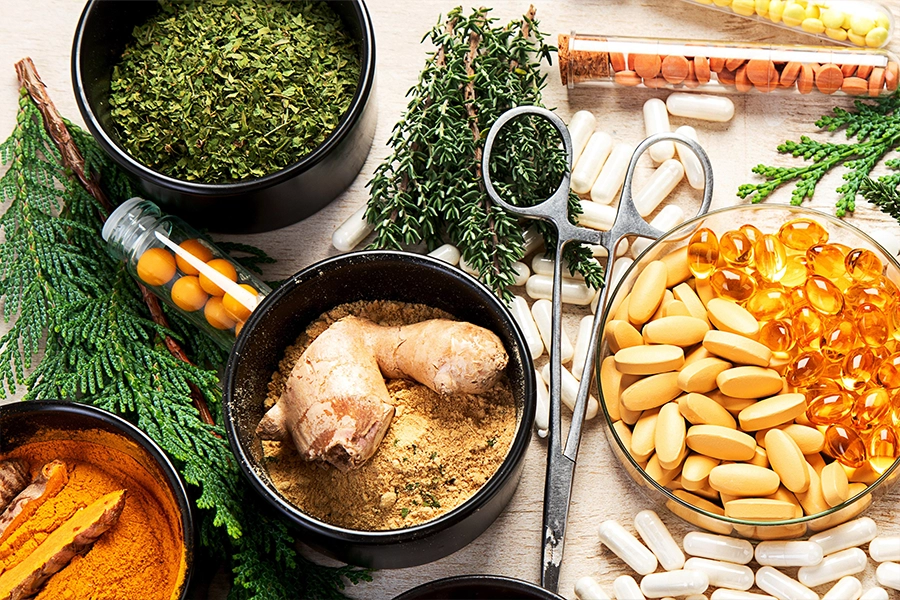 Activ’Inside and the University of Bordeaux inaugurated the Biophysia joint laboratory in France to advance bioavailability research on phytonutrients.Gaudout notes that many botanicals are marketed as food supplements rather than medicinal products. This means companies do not always need rigorous pharmacokinetic data to bring products to market, which may reduce industry incentive to conduct such studies.
“Furthermore, advanced methods — e.g., UHPLC-MS, ex vivo digestion models, and clinical trials — demand specialized skills and investment, which many manufacturers have historically deprioritized.”
Promise to performance
Gaudout believes that bioavailability is on its way to becoming a new benchmark for ingredient quality, which could “profoundly” reshape the botanical market.
“For a long time, ingredient quality has been judged mainly by origin, concentration, or in vitro antioxidant capacity. However, an ingredient only delivers real benefits if it is absorbed, metabolized, and efficiently used by the body. Without this, even the most ‘active’ compound remains largely theoretical.”
“What this means in practice is a move away from promise-driven formulations toward performance-driven ones. Bioavailability forces the industry to ask harder, more relevant questions,” he notes.
Examples include whether a compound is released during digestion for bioaccessibility or whether a compound enters the systemic circulation in an active state, making it bioavailable. Another question is whether the compounds’ metabolic state and physiological effects can be measured in humans
“Activ’Inside’s approach illustrates how this new benchmark could work. By combining targeted extraction of highly active monomeric forms with advanced human metabolization studies — conducted through collaborations with leading local and international universities — the company goes beyond assumptions and in vitro models.”
“Activ’Inside directly quantifies human absorption, metabolic pathways, and tangible biological effects. This evidence is generated not only through in vitro research but also through our 24 clinical studies and epidemiological studies in humans. As a result, efficacy becomes measurable, reproducible, and continuously improvable over time,” explains Gaudout.
He says that if bioavailability becomes the standard, the market will be divided. Ingredients backed by theoretical efficacy or generic claims will struggle.
Solutions backed by human data, mechanistic understanding, and proven metabolic activity will be regarded as credible and innovative. Gaudout highlights Activ’Inside’s Memophenol, Safr’inside, and Belight 3 as examples of such innovations.
Biophysia uses advanced analytical technologies to track phytonutrient absorption, metabolism, and systemic exposure in humans.“Ultimately, this shift would benefit everyone: brands gain stronger, science-backed differentiation; formulators design more efficient products; and consumers receive nutricosmetic solutions that deliver faster, more reliable, and truly tangible inside-out beauty benefits.”
“Bioavailability, in this sense, doesn’t just raise the bar — it redefines what ‘quality’ really means,” he states.
Meeting health claims
According to Gaudout, Biophysa’s data aligns with EFSA’s scientific substantiation criteria. At present, the authority has no dedicated “bioavailability” claim framework, and botanical health claims remain on hold in the EU.
“For new nutrient sources, EFSA requires data on relative bioavailability compared to established forms. In dossiers for health claims, EFSA looks for well-designed human studies demonstrating physiological effects at defined intakes, linked to plausible mechanisms — including how much of a compound actually reaches systemic circulation.”
“Also, mechanistic data, such as absorption and metabolism, strengthen plausibility even if EFSA ultimately focuses on clinical outcomes,” he adds.
Balancing innovation and independent science
Gaudout explains that scientific independence is maintained despite the industry-academic partnership.
“At Biophysa, the MIB unit research team conducts core scientific work, ensuring that methods, data interpretation, and publication decisions are not solely controlled by the sponsoring industry party. Funding from external bodies like the ANR adds further oversight.”
“Transparency and objectivity are central to the collaboration. While Activ’Inside contributes technical input on materials and methods — reflecting its domain expertise and the applied nature of the research — it does not influence experimental results, data interpretation, or scientific conclusions, which are derived solely from objective, evidence-based findings,” he states.
Their partnership is like other recognized industry-academic consortia in clinical nutrition and pharmacology that balance innovation with independent science, Gaudout adds.
Evidence on bioavailable formulations
These days, Gaudout underscores that consumers want products that are natural and clinically proven, and Biophysa can meet this demand by approaching formulation with a focus on bioavailability.
“The facility prioritizes ingredients with demonstrated absorption and metabolite profiles, such as polyphenols or carotenoids, not just high content of marker compounds.”
“It also identifies formulation strategies that enhance bioavailability, including optimized food matrix interactions, e.g., polyphenol-protein interactions, and carefully designed delivery formats to deliver the same level of absorption — while offering a more convenient and enjoyable consumer experience, such as Activ’Inside’s TechCare gummies.”
Gaudout explains that such strategies are directed by pharmacokinetic and metabolic outcomes, not theoretical assumptions or ingredient content alone.
“Biophysa supports clinically relevant dosing, aligning product design with doses shown to be absorbed and potentially efficacious in human studies. As a result, formulation becomes evidence-driven — selecting components and delivery forms that maximize the likelihood of real physiological benefit, rather than simply marketing high mg quantities.”