

Kale bioaccessibility improves when paired with oil dressings, experts suggest
Key takeaways
- Fat-soluble carotenoids in kale are poorly absorbed unless eaten with oil, and nanoemulsion-based sauces significantly improve bioavailability.
- Raw and cooked kale both show low carotenoid absorption, but adding an oil-based or nanoemulsion dressing boosts uptake regardless of preparation method.
- Researchers are developing specialized dressings using nanotechnology to enhance nutrient absorption and support healthier dietary strategies.
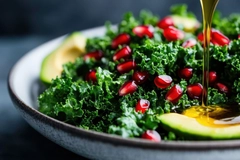
Oil-based dressings or sauces can enhance the absorption of beneficial carotenoids from kale, finds recent research.
Researchers from the University of Missouri, US, point out that kale needs proper preparation, as the body struggles to absorb the fat-soluble nutrients in raw and cooked kale. This is how nanoemulsion-based sauces significantly improve absorption.
The publication in Food Nutrition says the finding opens opportunities for innovations in salad dressings targeting nutrient absorption. The research team is now exploring specially designed dressings using nanotechnology for better health benefits.
“Our findings highlight a practical approach to improving the nutritional impact of kale and similar vegetables, supporting the development of dietary strategies that maximize the health benefits of carotenoid-rich foods using food design approaches,” highlights the study.

Kale benefits and sauce preparation
Kale is also rich in vitamins C and E, along with lutein, tocopherols, ascorbic acid, glucosinolates, and polyphenols linked to health benefits, such as better vision, cognitive aging, and immunity, as well as a lower risk of diabetes, heart disease, and some cancers.
“Kale is a nutrient-rich vegetable that contains carotenoids, including lutein, α-carotene, and β-carotene, which have beneficial effects on overall health,” says Ruojie (Vanessa) Zhang, assistant professor, Food, Nutrition and Exercise Sciences at the College of Agriculture, Food and Natural Resources.
“The problem is our bodies have a hard time absorbing these nutrients because they are fat-soluble rather than water-soluble.”
 Ruojie (Vanessa) Zhang, assistant professor in the Division of Food, Nutrition and Exercise Sciences at CAFNR.To make the sauce, the researchers used extra virgin grade olive oil from Bertolli and Davisco Foods International’s whey protein isolate from cow’s milk.
Stimulating digestion and absorption
The team tested whether cooking kale or adding dressings or sauces would make the carotenoids easier for the body to use.
In a lab setup stimulating how food is digested, the team tested raw, cooked, raw or cooked with dressing/sauce, and cooked in sauce.
“Changes in particle size, charge, and microstructure of the kale samples were measured as they passed through simulated mouth, stomach, and small intestine phases,” details the paper.
Raw kale alone had low carotenoid absorption, and cooking it made it worse.
The stimulated gastrointestinal tract absorbed many more carotenoids when researchers added a special nanoemulsion-based sauce, regardless of whether the kale was raw or cooked. Also, cooking the kale with the sauce was equally beneficial as adding it afterward.
“Our team is committed to advancing food science with the goal of improving human health through the development of innovative foods and technologies,” says Zhang. “We believe impactful science can drive meaningful change in global nutrition and well-being, and we’re excited to contribute to that mission.”
Earlier this year, Nutrition Insight discussed how fats can help increase nutrient delivery in the body or increase uptake of compounds with AAK’s global head of R&D.