- Industry news
Trending now
- Category news
- Reports
Trending now
- Key trends
Trending now
- Multimedia
Trending now
- Journal

- Events
Trending now
- Suppliers
Trending now




- Home
- Industry news
Trending now
- Category news
- Reports
Trending now
- Key trends
Trending now
- Multimedia
Trending now
- Events
Trending now
- Suppliers
Trending now
Ingredient suppliers key to bringing clarity to ultra-processed food debate
Key takeaways
- The lack of a clear, science-based definition for UPFs is driving consumer confusion, regulatory uncertainty, and mistrust across the food system.
- Ingredient suppliers and industry groups argue that processing itself is not the problem; rather, its purpose and intensity determine health outcomes.
- Calls are growing for cleaner reformulation, transparent ingredient choices, and evidence-based regulation.

As ultra-processed foods (UPFs) have taken over supermarket shelves, there is an ongoing debate about their healthiness. Meanwhile, an unclear and contested definition, commonly based on the Nova classification system, often creates misunderstandings among consumers and regulators, resulting in confusion and distrust.
However, the ACI Group and Specialised Nutrition Europe (SNE) remind us that processing is not inherently “bad” and often essential to improve access to nutrition. They highlight the role of ingredient suppliers in the UPF debate and the opportunities for innovation.
Karsten Smet, ACI Group CEO, calls for clarity surrounding UPFs, highlighting the role of ingredient suppliers in bringing transparency, creating cleaner alternatives, and working with policymakers to improve food innovation and consumer confidence.
“The first step lies in reformulating with natural functional equivalents. Equally important is the shift toward clean technology processing systems.” He adds that proactive collaboration with regulatory bodies can reshape food classification.
Meanwhile, SNE believes that food processing is essential, as it ensures food safety, nutrient adequacy, and accessibility, especially for infants. It critiques UNICEF’s recent global report on UPFs linked to children’s poor diet quality, overweight and obesity, and dental caries.
“While we appreciate the intention to protect children’s health, demonizing food processing does not help. Many foods are processed for very good reasons. Without processing, our sector would not be able to provide much-needed products for people with specific nutritional needs,” says SNE secretary general, Beat Späth.
SNE highlights the strict EU regulations on baby foods, such as sodium limits and banned dyes, which are beneficial for infants and are recognized by health authorities. At the same time, the organization calls for further regulation on child formula composition and for updates to infant food standards.
Buzzword blurs nuance
The lack of a universally accepted definition for UPFs is driving debate across the nutrition sector — from suppliers, nonprofits, and governmental bodies.
“Once an academic classification, the term ‘ultra-processed’ is now a buzzword in policy circles, supermarket aisles, and social media. Yet, despite the debate, there is little agreement on what ultra-processing actually means, how it differs from standard processing, or why it matters,” remarks Smet.
“This lack of clarity has real implications for food innovation, consumer trust, and regulation. As health authorities, scientists, and brands struggle to define and communicate UPFs, ingredient suppliers can bring clarity and science-led solutions to the table.”
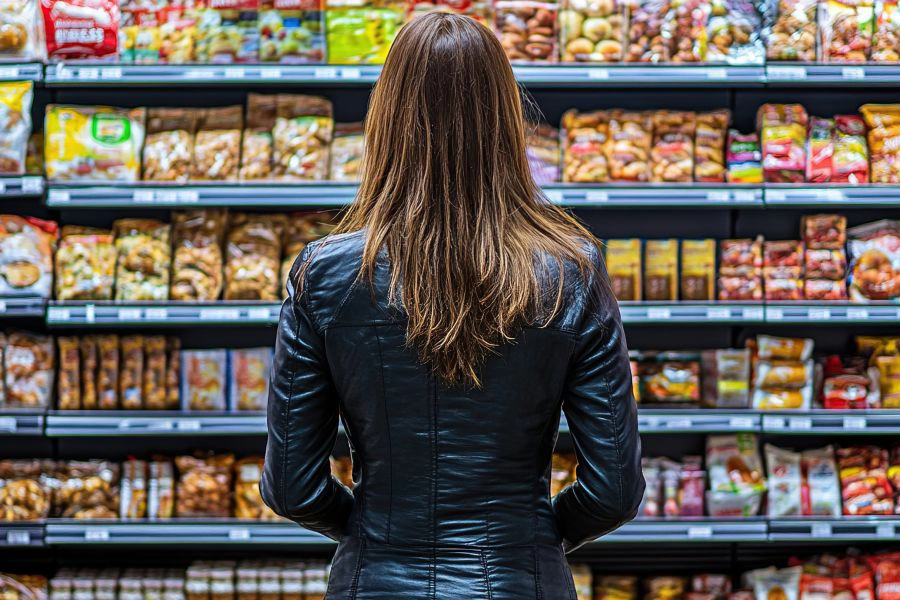 Industry leaders say the growing use of the term “UPFs” is oversimplifying food processing, fueling consumer confusion and policy debates that may not be grounded in science.He underscores that the issue is not the processing itself. Pasteurization, freezing, canning, fermentation, and dehydration are important for preserving nutrients, ensuring food safety, improving food security, and reducing foodborne illnesses.
“Ultra-processing, by contrast, refers to industrial formulations made mostly or entirely from substances derived from foods and additives, with little resemblance to their original ingredients.”
“According to the widely cited (and contested) Nova classification, UPFs are foods that bear little resemblance to their original ingredients due to extensive industrial modification, including extrusion, hydrogenation, hydrolysis, and use of artificial flavorings, colorings, sweeteners, and texturizers that can mimic the functional and sensory qualities of whole foods,” details Smet.
The Nova system has been critiqued for failing to capture the nuances of processing versus its purpose, he adds, also noting that additives are not inherently harmful.
“For instance, a fortified breakfast cereal and a meat alternative may contain additives and be labelled ‘ultra-processed,’ yet their nutritional profiles and impact on consumer health and well-being differ greatly.”
“The UPF debate taps into broader anxieties about modern diets and trust in the food and beverage industry. Consumers correctly sense that some packaged foods are less nourishing than their whole food counterparts. But the lack of consistent definitions means that ‘ultra-processed’ has become a catch-all term for anything industrial, chemical-sounding, or artificial,” says Smet.
He adds that the lack of definition poses a significant challenge for regulators and manufacturers, as policies may be driven by ideology rather than science.
Meanwhile, SNE underscores that the proposed classification system of UPFs lacks scientific consensus, leading major EU nutrition bodies to reject this concept.
Processing is a tool
UNICEF’s latest report reviewing evidence on UPFs and children concluded that these food products are overtaking nutrient-rich traditional foods, driving persistent undernutrition, hidden hunger, and rising overweight and obesity. This triple burden especially affects children and adolescents, as they are vulnerable to UPFs as they develop and form taste preferences. They are also highly susceptible to marketing.
Smet comments: “Criticism of UPFs is not without merit. Studies show that intensive processing can deplete micronutrients, fiber, and bioactive compounds. Higher heat, extended processing, solvent extraction, and other harsh treatments can degrade vitamins, denature proteins, and reduce beneficial polyphenols.”
 Food industry groups argue that processing can support safety, nutrition, and accessibility — particularly in infant and specialized nutrition.“Moreover, UPFs often rely on refined starches, added sugars, unhealthy fats, and sodium, designed to maximize sensory appeal rather than nutrition. This combination can alter metabolic responses and has been linked with higher rates of obesity, inflammation, and cardiometabolic disease.”
UNICEF highlights that this type of UPF is especially prevalent in West Africa, which is undergoing a rapid nutrition transition. “At the macro level, globalization, trade liberalization, urbanization, and supermarket expansion, combined with aggressive marketing, have expanded access to UPFs.”
“At the community level, unhealthy food environments in schools, markets, and workplaces shape choices, while at the personal level, time poverty, cultural perceptions, and early socialization reinforce reliance on UPFs.”
However, Smet stresses that the issue should not be whether or not a food is processed but the purpose of processing. Processing can be beneficial if it focuses on nutrients, health, and food safety. “If the goal is hyperpalatability, cost-cutting, and long shelf life at the expense of nutritional value, then the risk of harm rises.”
“Ingredient suppliers can play a positive role by offering solutions that deliver functionality, including shelf life, texture, and safety, without defaulting to heavy ultra-processing.”
To elucidate, he takes the case of California’s 2024 UPF Assembly Bill 1264, the first law to formally define UPFs. “The law combines ingredient and nutrient-based criteria, considering additive use (such as emulsifiers, stabilizers, and non-nutritive sweeteners) and the thresholds for saturated fat, added sugars, and sodium,” says Smet.
It will phase out certain UPFs in schools between 2029 and 2035, and suppliers must detail ingredients, nutrition panels, and UPF classification status. However, Smet warns that reformulation will not suffice.
“Reducing sugar, salt, or fat doesn’t exempt a product if it still contains additives that do not confer a benefit to the consumer. This marks a deeper regulatory focus on processing methods, not just nutrient content.”
He believes that the law could eventually have global implications, requiring companies to reassess their formulations and transparency practices.
Innovate with cleaner, naturally functional additives
Smet calls for brands and suppliers to act, as they can link science and consumer perception, functionality and nutrition. They could also take food innovation to the next level by using natural, clean label alternatives instead of synthetic additives, using bio-based chemistry.
Firstly, in reformulations, Smet notes the beneficial use of plant fibers that stabilize textures, fermentation-derived cultures that extend shelf life, or botanical extracts that deliver vibrant, stable colors. “These innovations don’t just satisfy regulatory expectations; they actively rebuild consumer trust.”
Next-gen processing systems prove that you can have both functionality and freshness, he adds. For example, low-shear and enzyme-assisted processes, cold-pressing, high-pressure processing, and controlled fermentation can help manufacturers process foods without crossing the “ultra” category.
Companies can also increase transparency by utilizing storytelling. “Consumers are no longer content with long opaque ingredient lists or ambiguous claims. They want to understand why a certain additive or process is used and how it contributes to safety, nutrition, or shelf life.”
Finally, Smet underscores the importance of working proactively with regulators, as UPF regulations are no longer hypothetical. Businesses that keep an eye on these conversations, participate in advisory groups, publish white papers, or establish data-sharing alliances will contribute to definitions rather than respond to them.
“The ultimate goal is collaboration on evidence-based frameworks. Working alongside scientists, health bodies, and regulators, industry can move toward a definition of ultra-processing grounded not in emotion or optics, but in measurable outcomes around nutrient density, bioavailability, metabolic impact, and long-term health relevance,” he states.
“For ingredient brands, this is a challenge and an opportunity. To lead, the industry must anticipate regulation, audit ingredient portfolios, and invest in compliant innovation. The message must also evolve; processing isn’t inherently bad, but irresponsible processing is. By demonstrating that smart, responsible processing supports nutrition and sustainability, companies can position themselves as part of the solution.”