



World Cancer Day 2026: Danone calls nutrition essential to fight disease-related malnutrition
Key takeaways
- Danone is partnering with the UICC to mandate medical nutrition as an essential, rather than optional, part of standard cancer treatment.
- Malnutrition affects 70% of cancer patients and causes up to 40% of related deaths, yet it frequently remains undiagnosed or untreated.
- Integrating nutritional care could save €17 billion annually by improving treatment tolerance and reducing expensive hospital complications.

On today’s World Cancer Day, Danone becomes the first food business joining forces with the Union for International Cancer Control (UICC) to advocate for nutritional care’s recognition as an essential component of cancer treatment while strengthening workplace protections for its employees with a diagnosis.
Cancer-related malnutrition is a “prevalent yet overlooked challenge” in oncology, underscores the global group. It finds that up to 70% of people living with cancer experience malnutrition, negatively impacting treatment effectiveness and recovery.
On average, one in three patients delays or stops treatment due to weight loss, while two out of three patients who need medical nutrition do not have access to it.
Beyond its negative impact on patients, malnutrition significantly strains healthcare systems. In the EU, cancer-related malnutrition is estimated to cost up to €17 billion (US$20 billion) each year, according to Danone research.

Within the new partnership, Danone is supporting its own employees diagnosed with cancer through its “Working with Cancer Pledge” to ensure job security and reduce stigma. It is also calling for standard oncology protocols to focus more on medical nutrition, alongside organizations such as the European Cancer Organization.
The company’s medical nutrition brand Nutricia offers products that address the unique needs of patients, notably Fortimel, with refined sensory profiles to enhance the care experience. These innovations are accompanied by digital tools and educational resources for caregivers and healthcare professionals.
Nutrition Insight speaks with Danone’s Katrien van Laere, senior VP and chief medical and scientific officer, who addresses the critical gap in dietitian-led patient care and the growing movement in medical nutrition.
Why is malnutrition often missed in the cancer care pathway?
Van Laere: Cancer-related malnutrition can be missed at any point along the care pathway. The risk is already high at diagnosis and before treatment begins, largely due to the absence of standardized screening protocols, limited nutritional pathways, and competing resource pressures.
Vulnerability remains high during active treatment and at key transition moments. Although side effects such as taste changes, fatigue, or gastrointestinal discomfort are widely recognized, their nutritional consequences are not always identified early or addressed systematically.
As patients move between hospital care, outpatient settings, and recovery, responsibility for nutrition often becomes fragmented — increasing the likelihood that support is delayed or lost altogether.
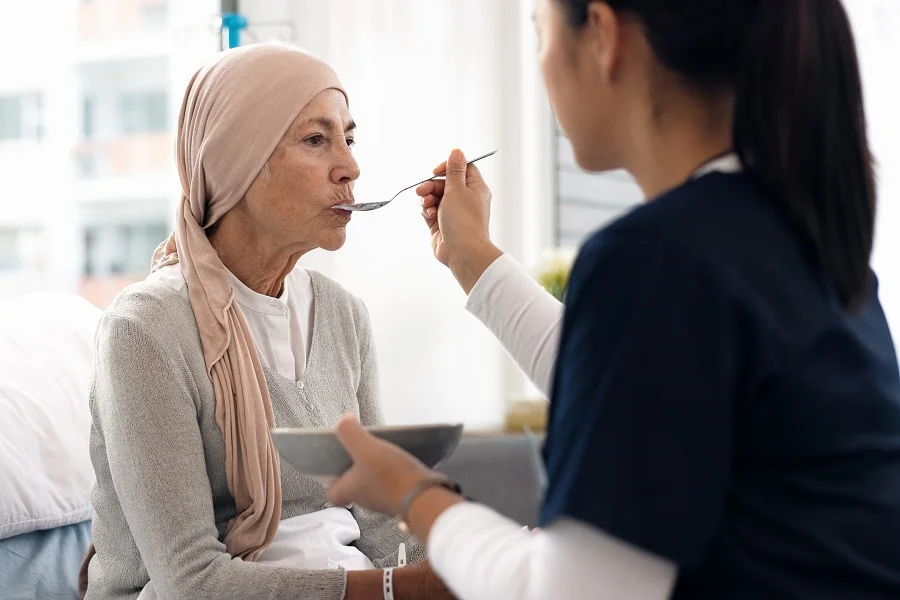 Up to 70% of people living with cancer experience malnutrition, yet it still falls through the cracks because it’s treated as supportive rather than essential care.Up to 70% of people living with cancer experience malnutrition, yet it still falls through the cracks because it’s treated as supportive rather than essential care. Between 30–80% of patients may lose weight at some point during their disease, depending on the site of the tumor. Worryingly, malnutrition is considered the cause of between 20–40% of all cancer-related deaths.
Nutrition isn’t consistently embedded into clinical pathways, accountability is unclear, and access to specialist nutritional support varies widely across healthcare systems. As a result, interventions come too late, despite clear science-based evidence that malnutrition undermines treatment response.
How can nutrition be embedded into international cancer care standards?
Van Laere: Instead of being viewed as optional, nutrition would be considered essential to help patients tolerate treatment, recover effectively, and maintain their quality of life.
In practice, this would involve routine nutritional screening from diagnosis onwards, with clear thresholds for intervention and regular re-assessment throughout treatment and recovery. Nutrition would be planned and reviewed as part of the treatment plan within multidisciplinary teams with defined responsibilities, appropriate resourcing, and measurable outcomes.
All patients should have access to appropriate nutritional screening, as well as credible and timely nutrition advice from trusted experts within the multidisciplinary healthcare team.
Which patient groups or cancer types are most at risk of treatment disruption due to malnutrition?
Van Laere: One in three people with cancer is affected by malnutrition, and certain patients are at even higher risk, including patients with gastrointestinal cancer (such as colon, stomach, and pancreatic cancer) as well as head and neck cancer and lung cancer.
While anyone undergoing cancer treatment can experience nutritional decline, older adults, those living with advanced disease, and individuals experiencing high inflammation or treatment side-effects that prevent them from eating normally (such as loss of appetite or taste alterations) are especially vulnerable.
Ensuring that nutritional needs are identified and addressed early is therefore essential to help patients stay on their treatment pathway. In line with the European Society for Clinical Oncology — one of the leading global oncology societies — guidelines are needed that endorse implementation of nutritional management as an integral part of cancer care and provide recommendations for identification, prevention, and treatment of reversible elements of malnutrition in adult cancer patients.
Medical nutrition has been clinically proven to help cancer patients meet their nutritional needs, reduce treatment-related complications, and improve treatment outcomes.
How can policymakers justify prioritizing nutrition when oncology budgets are already under pressure?
Van Laere: Cancer‑related malnutrition is a highly prevalent but still under‑recognized issue, affecting roughly one in three people with cancer every year. With around 20 million people diagnosed annually, the scale of the problem — and its economic impact — is significant.
Malnutrition drives avoidable costs throughout the cancer pathway. Patients experience more complications, longer hospital stays, higher rates of unplanned admissions, and poorer treatment tolerance. This means that substantial oncology investments do not deliver their full value when patients are too weak to receive or complete treatment as intended.
In Europe alone, cancer-related malnutrition is estimated to cost up to €17 billion (US$20 billion) each year. For policymakers, prioritizing nutrition is therefore not an added expense — it is one of the clearest ways to reduce waste, protect oncology budgets, and improve treatment efficiency.
.webp) Malnutrition drives avoidable costs throughout the cancer pathway.Ensuring patients receive timely nutritionally supported care helps therapies work as designed and eases pressure on already stretched healthcare systems.
Malnutrition drives avoidable costs throughout the cancer pathway.Ensuring patients receive timely nutritionally supported care helps therapies work as designed and eases pressure on already stretched healthcare systems.
Danone extends nutrition support to its employees living with cancer — what lessons from this internal approach could be applied at health system levels?
Van Laere: For us, the priority is to offer proactive, stigma-free support that adapts to each person’s reality, and that principle translates directly to what health systems can do.
Through the Working with Cancer pledge and its four pillars — a job safety net, personalized support, a nutrition support program, and a “break the stigma” culture — we ensure that employees living with cancer have security, flexibility, and understanding at a moment when uncertainty is overwhelming. Removing that fear allows people to focus on their health rather than on protecting their jobs.
Cancer affects individuals in unpredictable ways: symptoms fluctuate, energy levels change, and support needs evolve over time. A rigid, one‑size‑fits‑all model simply doesn’t work.
The same is true in healthcare. The lesson from our internal approach is the need for personalized, adaptable support — including nutritional support, which must evolve alongside treatment and recovery.