- Industry news
Trending now
- Category news
- Reports
Trending now
- Key trends
Trending now
- Multimedia
Trending now
- Journal

- Events
Trending now
- Suppliers
Trending now



- Home
- Industry news
Trending now
- Category news
- Reports
Trending now
- Key trends
Trending now
- Multimedia
Trending now
- Events
Trending now
- Suppliers
Trending now
InsideTracker scales personalized wellness insights for broader public health impact
Key takeaways
- InsideTracker, initially a B2C platform, is pivoting to a B2B model, offering scientifically based, personalized recommendations tailored to individual data.
- The platform uses data from blood tests, DNA, wearable devices, and lifestyle information to provide actionable, evidence-based health optimization advice.
- With a growing market for personalized nutrition, InsideTracker is leveraging its data and scientific foundation to scale impact.
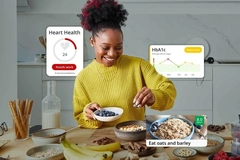 Image credit: InsideTracker
The nutrition industry is increasingly interested in offering personalized recommendations to meet consumer demand for targeted solutions. At the same time, access to blood and DNA tests has expanded significantly in the US, and an increasing number of consumers are using smartwatches and smart rings. Still, scaling health insights based on these data sources has been a challenge.
The technology platform InsideTracker is poised to support businesses in overcoming this hurdle. Founded in 2009, it utilizes a science-based model to analyze users’ blood, DNA, nutrition, and lifestyle data, providing personalized recommendations.
Rony Sellam, the CEO of Segterra, which owns and operates the InsideTracker platform, tells Nutrition Insight that the company is switching its B2C model to a B2B approach, offering its platform and products as a module to companies wanting to make personalized recommendations to consumers.
“InsideTracker started from a concept of being able to take a human being’s baseline and believing in the power of lifestyle and nutrition as a way to have an impact on health optimization, and coming to the realization that you can only demonstrate impact if you have a baseline that’s credible and quantitative.”
“We need people to know what to do and how to do it for their health. We need them to take control and responsibility, and for that, we need to give them tools to do it,” underscores Sellam. “This B2B model for us is a way to scale that consumer empowerment so that it can have a large impact on public health.”
“Empowering consumers to make the right decisions around their health is coming at the right time, because cost is ballooning everywhere globally around healthcare.”
The challenge of evidence-based personalization
Sellam notes that the world of supplements has become enamored with the concept of personalized nutrition, from raw material producers to retailers and brands.
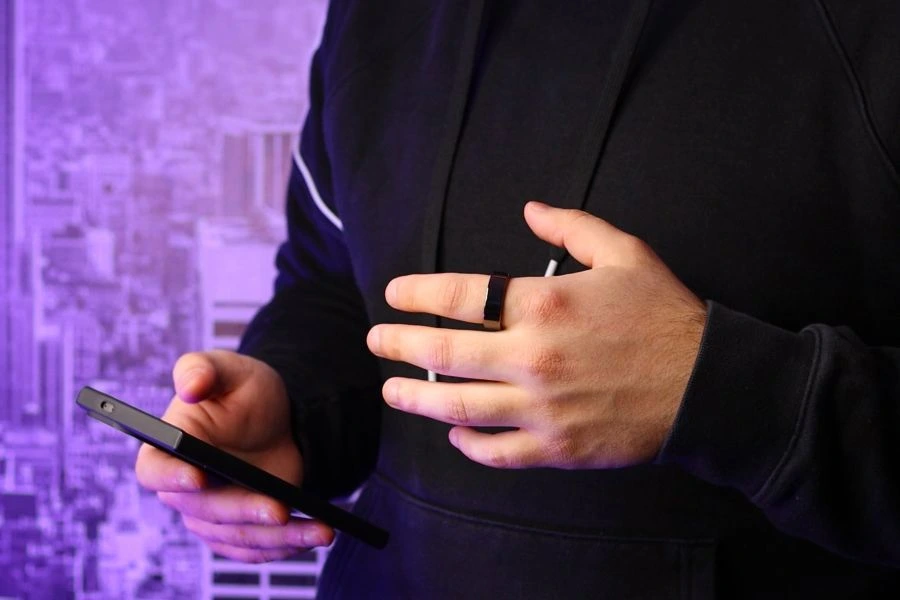 Sellam says that some companies offering wearables like smart rings are adding blood testing modules and want to know how to use data for recommendations.“Instead of buying a supplement because you have faith in supplements, what if you could change that faith-based decision into an evidence-based decision for the consumer?”
Although many companies knew this was an interesting concept, he notes that “nobody really knew how to do it.” Some companies use questionnaires to gather information on gender, physical activity levels, diet, and goals, linking consumers to a specific supplement. Others decided to take a more precise way, for example, through blood or DNA tests.
“To this day, there is no one leader or scaled solution for personalized supplementation, because at the end of the day, the mass- and scale-version of supplements is really primarily a faith-based decision.”
Sellam explains that the mass market is not interested in these detailed levels of data and testing. “What does work for the mass market is to go from vague wellness to something very functional and to have clear benefits.”
“Many large companies with scaled customer bases — we’re talking 500,000 users and customers and up to millions and millions — all want to create a world where they can deliver some kind of precision health model, personalization, and actionability that goes beyond what they’ve been doing.”
He underscores that InsideTracker can become a module in how they deliver value to their customers.
“That concept is an interesting and unusual evolution,” says Sellam. “It required us to have a head start of over 10 years — real science, lots of data, publishing our own papers, driving outcomes and building a technology platform that can connect and integrate with other players. And it required this massive change in blood tests, capabilities, and some commoditization.”
Quantitative system
In building its model, InsideTracker aimed to develop a scientific understanding of the impact of lifestyle interventions and measure it through blood tests.
 The platform’s model analyzes users’ blood, DNA, nutrition, and lifestyle data, providing personalized recommendations (Image credit: InsideTracker).“We decided to create a quantitative, disciplined, structured system so that you could take every single peer-reviewed scientific publication and put them into a system graded based on the size of the population and the quality of science,” details Sellam.
“The concept of asking a consumer to go get a blood test to understand how to optimize their health was revolutionary, because we as human beings only use blood as a disease screening mechanism.”
However, he emphasizes that health does not mean the absence of disease, a view that is gaining more widespread acceptance in nutrition and healthcare.
“We built those databases of best available science and then decided we’re going to use information from your blood, but also your phenotype, age, gender, ethnicity, level of physical activity, how much alcohol you consume, and any kind of input from a phenotypical perspective that can potentially have an impact and can be found in the science.”
Sellam explains that the company utilized computational tools to process the information, match users with the best available science, and generate an action plan and recommendations across food, supplements, exercise, and lifestyle.
“This is what InsideTracker started as. Then we added DNA and wearable device data.”
Pivoting to a B2B model
InsideTracker primarily grew its business on the B2C side, with a large number of users and extensive data, including phenotypical information, blood data, DNA, and wearable device data.
Sellam notes that in the last few years, more companies and investors have entered the personalization space amid a growing interest in longevity and healthy aging. “The large amount of investment and subsidies that some of those new, very well-capitalized companies are creating is a high level of interest, awareness, and demand from consumers.”
 Using computational tools, InsideTracker matches users with science and offers recommendations across food, supplements, exercise, and lifestyle.Moreover, consumer access to blood tests, wearable devices, and DNA tests has “exploded in the US,” which drives individuals’ interest in taking care of their health and seeing results.
“About two years ago, we started thinking about this rise of consumer interest as an opportunity for InsideTracker to move from a B2C company only to a technology and science platform that’s capable of ingesting blood, DNA, wearable device data, phenotypical data, and other inputs, and transforming them into meaning, actionability, and personalization, and then delivering that through a tech platform.”
InsideTracker’s mission is to help as many people live healthier for longer, says Sellam. This new B2B model enables the company to achieve that through partnerships with many large organizations, which would drastically increase its reach.
“From a value perspective, the more data you have, the more valuable the recommendations and the engine become,” he adds. “We’ve accumulated over 120,000 customers on the consumer side, and if we can get many more on the B2B side, the quality of the recommendations and data precision becomes much better.”
The company offers three branding models to its partners. InsideTracker’s products and technology can be fully integrated into a company’s offering under the InsideTracker brand. Companies can also use the information and recommendations from the tech company as “powered by InsideTracker” or not use any InsideTracker labeling.
Which model companies use also depends on whether they have a reputation or brand to offer evidence-based recommendations to consumers. For some companies, that might feel out of place or not credible, making it more important to show these recommendations are powered by InsideTracker.